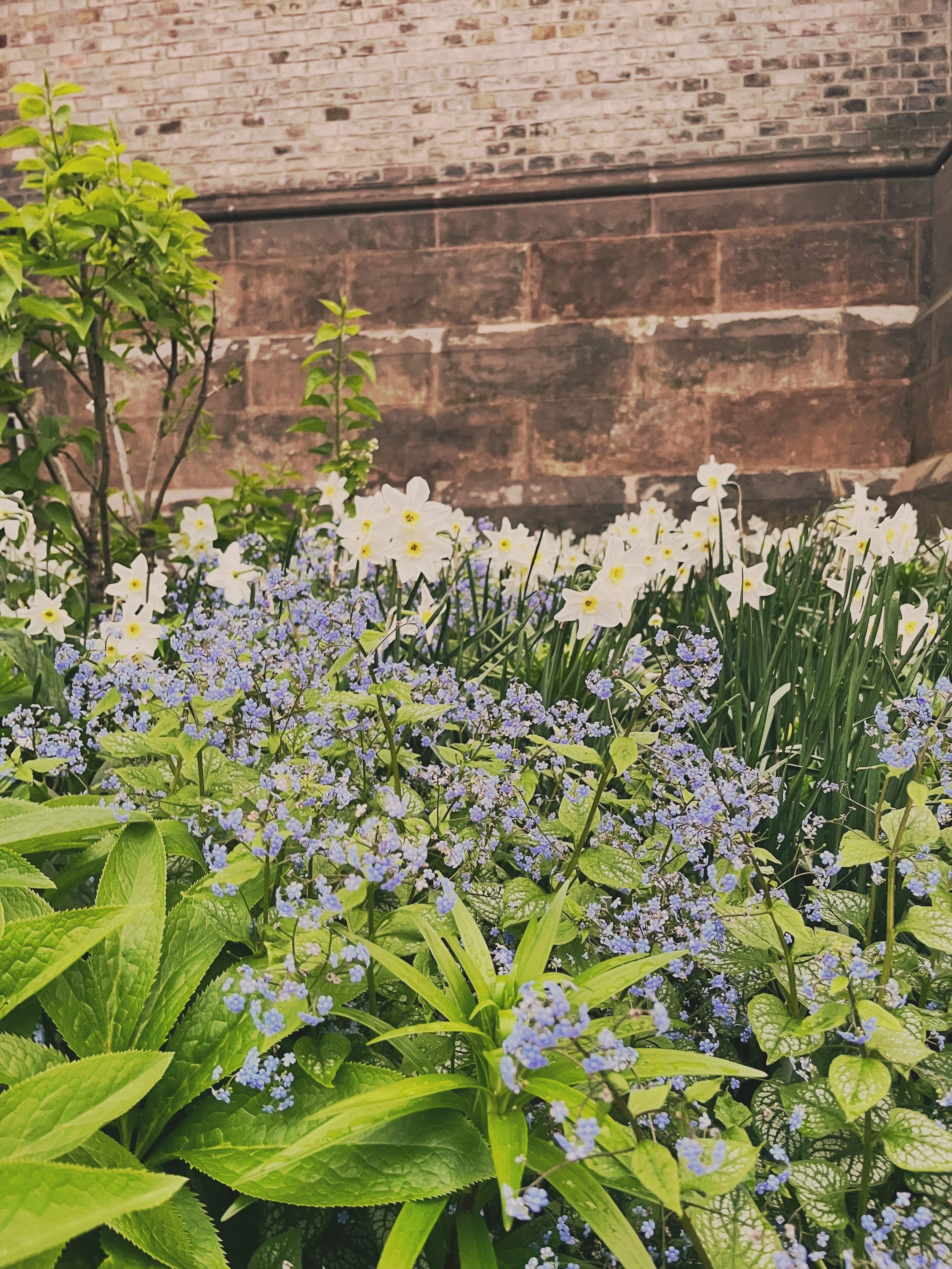
Blooming Where I’m Planted
I have done some rootwork.
As far as records can tell me, my family is Anglo-Saxon, Protestant, and white, with a little French ancestry woven in. Many generations lived in the southern United States. My grandfather almost got us into the First Families of South Carolina. But we stopped him. We didn't want to celebrate that history without also reckoning with what it had required.
I carry this ancestry. I also carry the privileges and responsibilities of moving through the world as a white woman. But ancestry is only one part of how a person is formed.
I was born in Raleigh, North Carolina, and moved to France when I was seven. What my family imagined as a brief adventure became eleven years in Europe. I spent four years near Paris and seven in Wassenaar, the Netherlands, attending international schools alongside students from dozens of countries.
I grew up among friends from Ghana, Kazakhstan, the Netherlands, Scandinavia, Britain, the United States, and many other places. Our classrooms held different languages, histories, religions, foods, and ideas of home. I learned early that no single culture is the center of the world.
For a long time, I thought of myself simply as European. I did not understand my Americanness, and I felt troubled by the consumption, individualism, and inequality I associated with the United States. With time, I have learned that I cannot step outside the country or history that shaped my family. But I can choose how honestly I meet that inheritance.
When I was fourteen, during a period of deep depression, I traveled with my school to Thailand. There I spent time with children from families displaced from Myanmar. We did not share much language, but we played. I pushed them on the swings for hours. We communicated through giggles and physical touch. I cuddled their youngest sibling, and for a little while, the playground became a magical place, and in my chest I finally felt an unclenching.
I look back often.
Those children were not placed in my life to teach me gratitude. Their joy did not make displacement or hunger less unjust. I knew very little about the histories they carried. But our meeting changed me. It showed me that relationship could interrupt despair. It taught me that presence could matter before expertise, and that shared laughter is one of the oldest medicines we have.
A remarkable teacher throughout my time in the Netherlands helped me understand service not as rescue, but as listening, collaboration, humility, and shared imagination. That lesson became a root of my life. It led me toward theatre, ethics, community organizing, education, and youth mental-health work. It taught me to ask not only what I can offer, but what I am being invited to learn, what histories I must understand, and what responsibilities come with entering another community.
My life continued to unfold across cultures. I embraced Islam and found in prayer a way to return, again and again, to humility and belonging. Sufism gave language to something I had sensed since childhood: beneath our many forms is a sacred connection to God, but unity—and the light within each of us—does not require sameness. Loving what connects us should make us more attentive to difference, not less.
Through faith, intercultural marriage, community work, emerging queerness, travel, friendship, and chosen kinship, I have been welcomed into worlds that are not mine by ancestry. I do not claim identities or struggles that are not mine. I do claim the relationships, communities, and responsibilities that have shaped my life.
All of this shapes the way I make art. I want to create work that is rooted but not enclosed, attentive without becoming possessive, and spacious enough for genuine encounter. I believe we meet one another most honestly when we arrive with our histories intact and our hearts open to being changed.
Above all, I hope to spend more of my life facing the sun than studying the shadows. These days, my attention is turning toward what grows. I want to become a cultivator of hope. I want to spend less time asking what dies in us as we move through life, and more time asking what helps us live. I have learned much from the forest floor. Now I find myself following the light between the trees.
I bloom where I am planted. But I also try to know the soil—to honor what was here before me, to notice what nourishes me, and to give something living back.